
Automotive Door Panel Clips Exporter: Engineering Secure and Silent Interiors
In automotive manufacturing, the door panel is not just a cover—it’s an integrated structure that contributes to noise insulation, safety, and design consistency. The fasteners that hold it together determine how long that structure performs without rattles or misalignment.
As a global automotive door panel clips exporter, QEEPEI specializes in fastening systems that meet OEM quality standards while ensuring reliable performance in high-volume production and aftermarket maintenance.
The Role of Door Panel Clips in Modern Vehicle Design
Automotive door panels combine aesthetic and functional elements—housing controls, insulation, and wiring. To keep everything secure, panel clips must:
-
Maintain a tight hold between metal frames and plastic interiors.
-
Withstand temperature fluctuations and repeated door closures.
-
Minimize vibration noise (NVH impact) in high-speed driving.
-
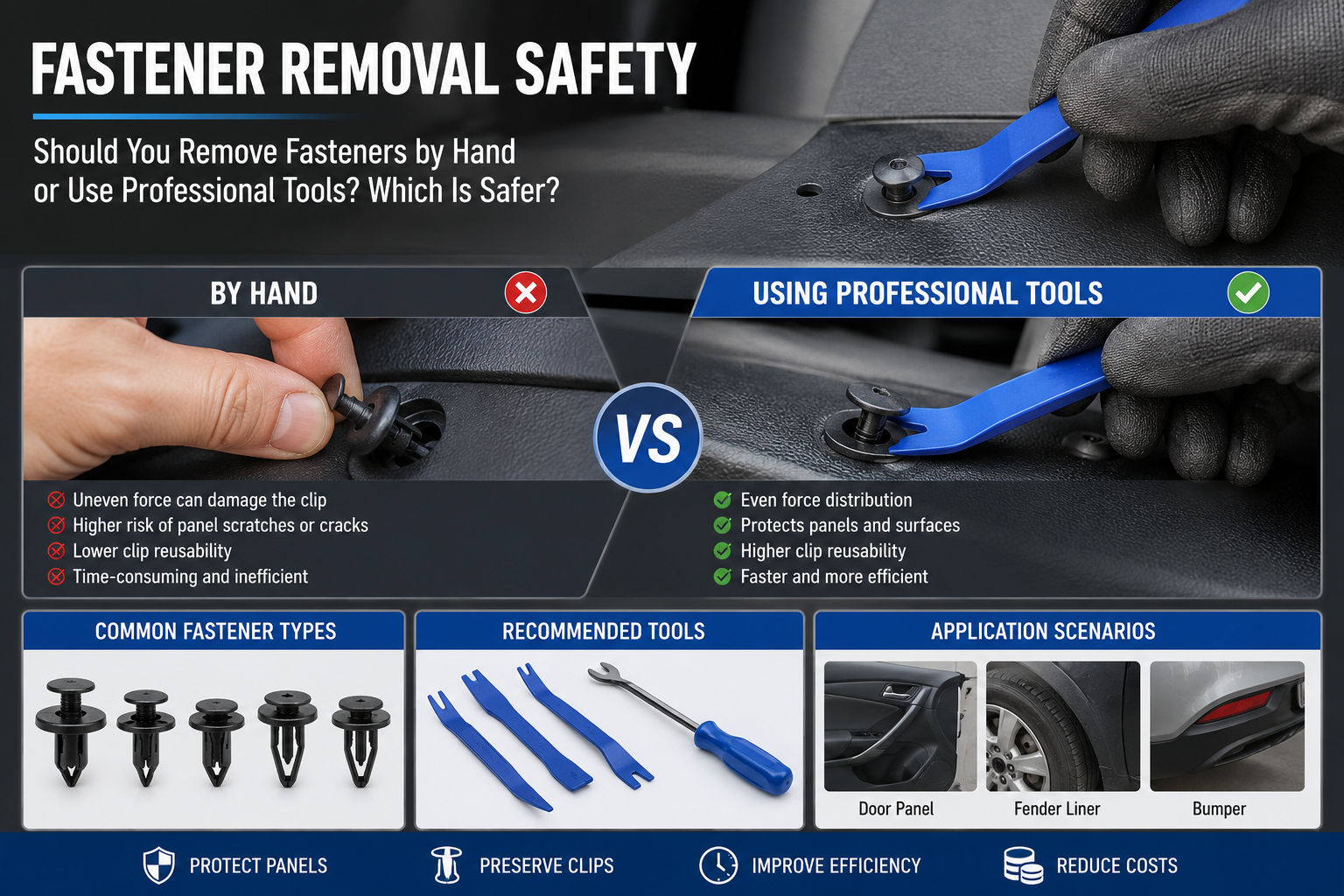
Allow quick installation and easy disassembly during maintenance.
By engineering clips that balance elasticity and strength, manufacturers can enhance long-term comfort and reduce post-sale maintenance issues.
Precision Materials for Strength and Acoustic Performance
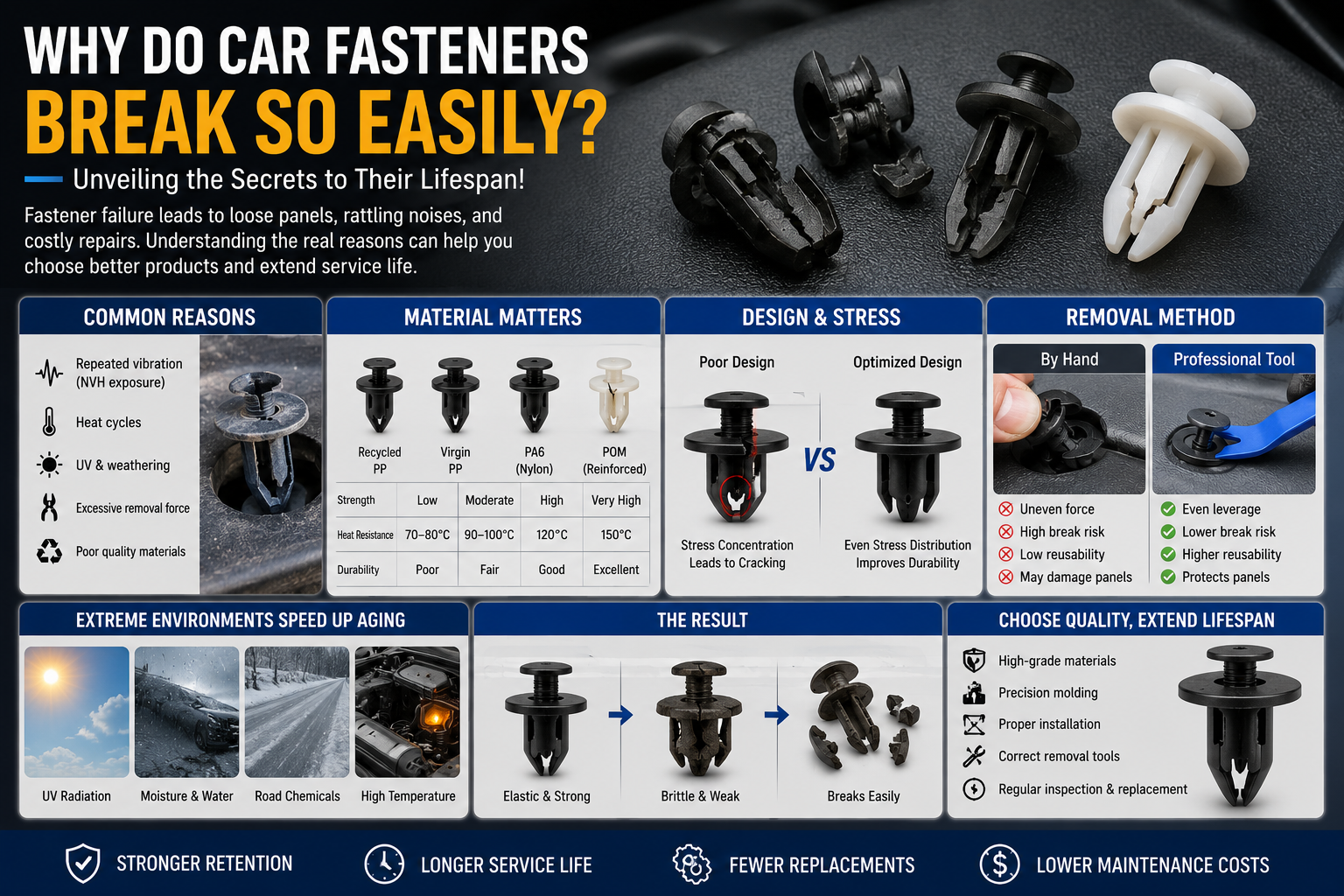
Door panel clips operate under constant dynamic stress—door slams, vibration, and interior temperature cycles. To address these challenges, the factory uses specialized polymer blends:
| Property | Technical Parameter | Buyer Benefit |
|---|---|---|
| Base Material | PA6 / POM / Reinforced PP | Combines flexibility with tensile strength |
| Operating Temp. | -40°C to 120°C | Suitable for both cold and tropical regions |
| Retention Force | ≥30N | Ensures panel stability under vibration |
| Fatigue Test | 10,000 open-close cycles | Guarantees long service life |
| Certification | ISO/TS16949, RoHS | Meets international OEM compliance |
These material properties are verified through pull-out testing, impact simulation, and dimensional accuracy checks to ensure each batch meets OEM-grade consistency.
Design Innovations That Improve Assembly Efficiency
Assembly efficiency directly impacts production cost.
QEEPEI’s door panel clips feature design enhancements that streamline installation and reduce assembly errors:
-
Self-centering geometry ensures quick alignment during robotic installation.
-
Anti-vibration ribs stabilize the connection between metal and polymer layers.
-
Dual-lock retention maintains hold after multiple door openings.
-
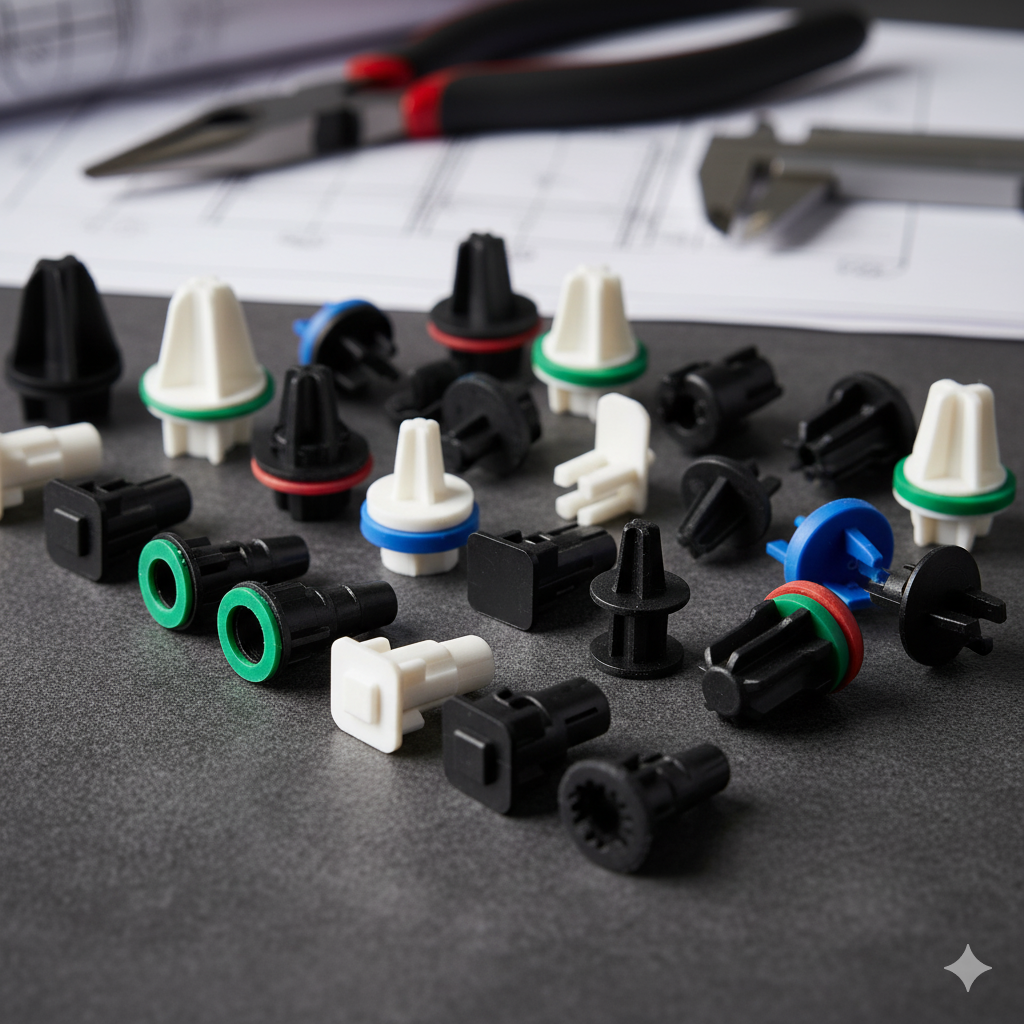
Color differentiation allows workers to identify positions quickly.
Such design optimizations help car makers achieve faster line throughput while maintaining consistent panel alignment and finish.
Meeting OEM and Aftermarket Demands
The same clip design principles serve both original manufacturers and distributors.
QEEPEI supplies:
-
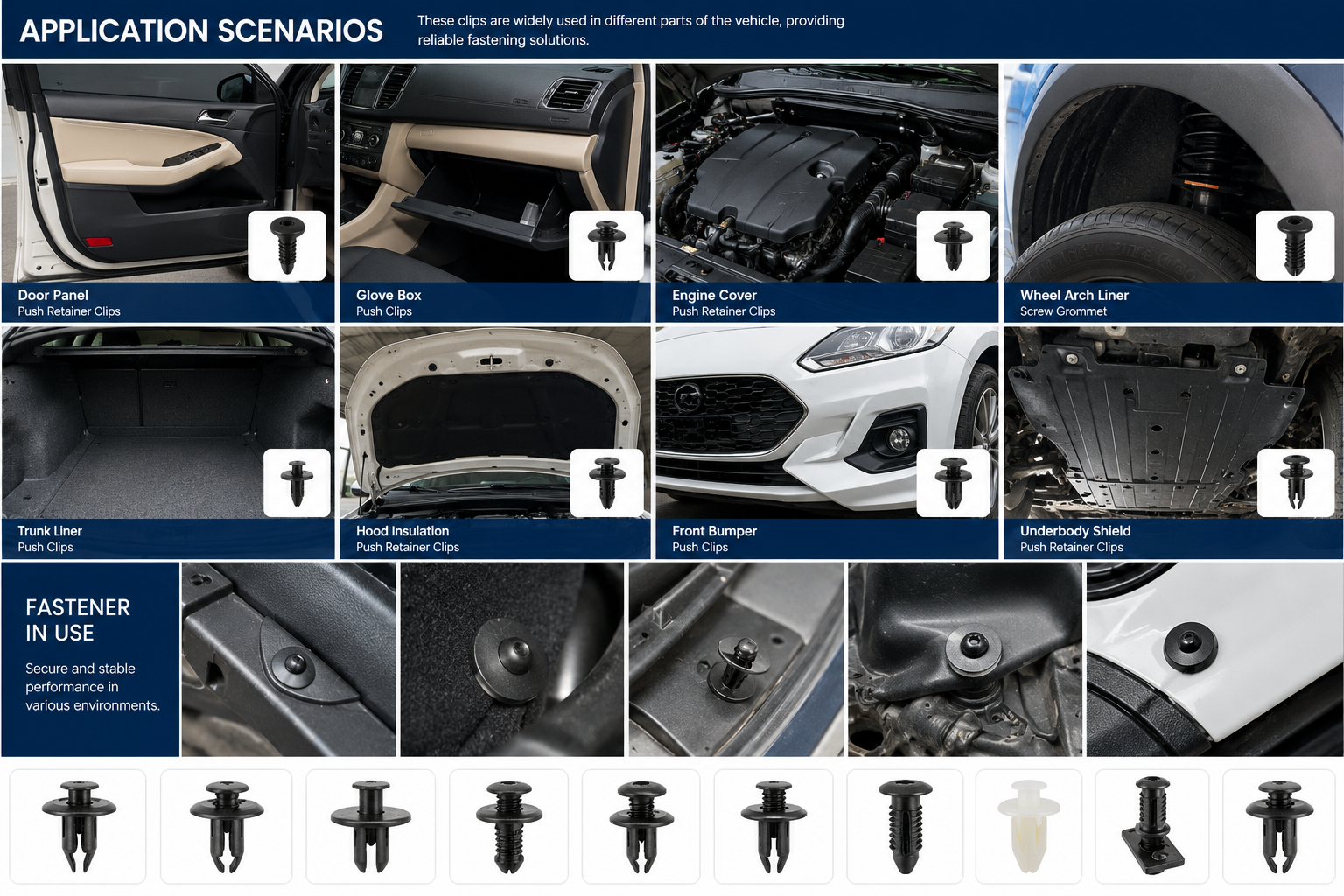
OEM specification clips compatible with major brands like Toyota, Volkswagen, and Ford.
-
Universal models suitable for aftermarket repair and maintenance businesses.
-
Customized solutions for new EV models and interior innovations.
This dual capability allows buyers to consolidate suppliers while maintaining high quality across different product lines.
Global Export and Logistics Reliability
A key advantage of a professional exporter lies in supply consistency.
QEEPEI operates under a well-structured international logistics framework:
-
Over 3,000 SKUs in active catalog, supporting quick dispatch.
-
24-hour shipping for in-stock models.
-
Custom packaging and labeling for distributors.
-
Flexible trade terms (FOB / CIF / DDP) for global customers.
-
Regional support teams ensuring technical assistance and fast response.
These features make QEEPEI not just a supplier, but a long-term strategic partner for automotive fastener procurement.
Reducing Cabin Noise Through Better Fastening
Interior noise reduction is increasingly tied to brand perception.
Loose or uneven door panel clips can create vibration noise, lowering perceived quality.
By ensuring uniform compression and contact area, precision clips help:
-
Minimize friction between panel surfaces.
-
Improve acoustic insulation retention.
-
Maintain structural alignment across long-term use.
For electric vehicles—where engine noise is absent—such improvements are even more noticeable, making fastening performance a key differentiator in passenger comfort.
Why Choose QEEPEI for Automotive Door Panel Clips
| Core Advantage | Description |
|---|---|
| OEM Engineering Standards | Precision molds designed to automotive-grade tolerances |
| Material Durability | Heat- and UV-resistant polymers for extended lifespan |
| Ease of Installation | One-step snap-in system for quick assembly |
| Consistent Quality Control | Multi-point inspection before shipment |
| Reliable Export Network | Fast delivery and flexible trade options |
Frequently Asked Questions
Q1: Do these clips fit both front and rear doors?
Yes, multiple clip variants are available to match various door panel thicknesses and frame geometries.
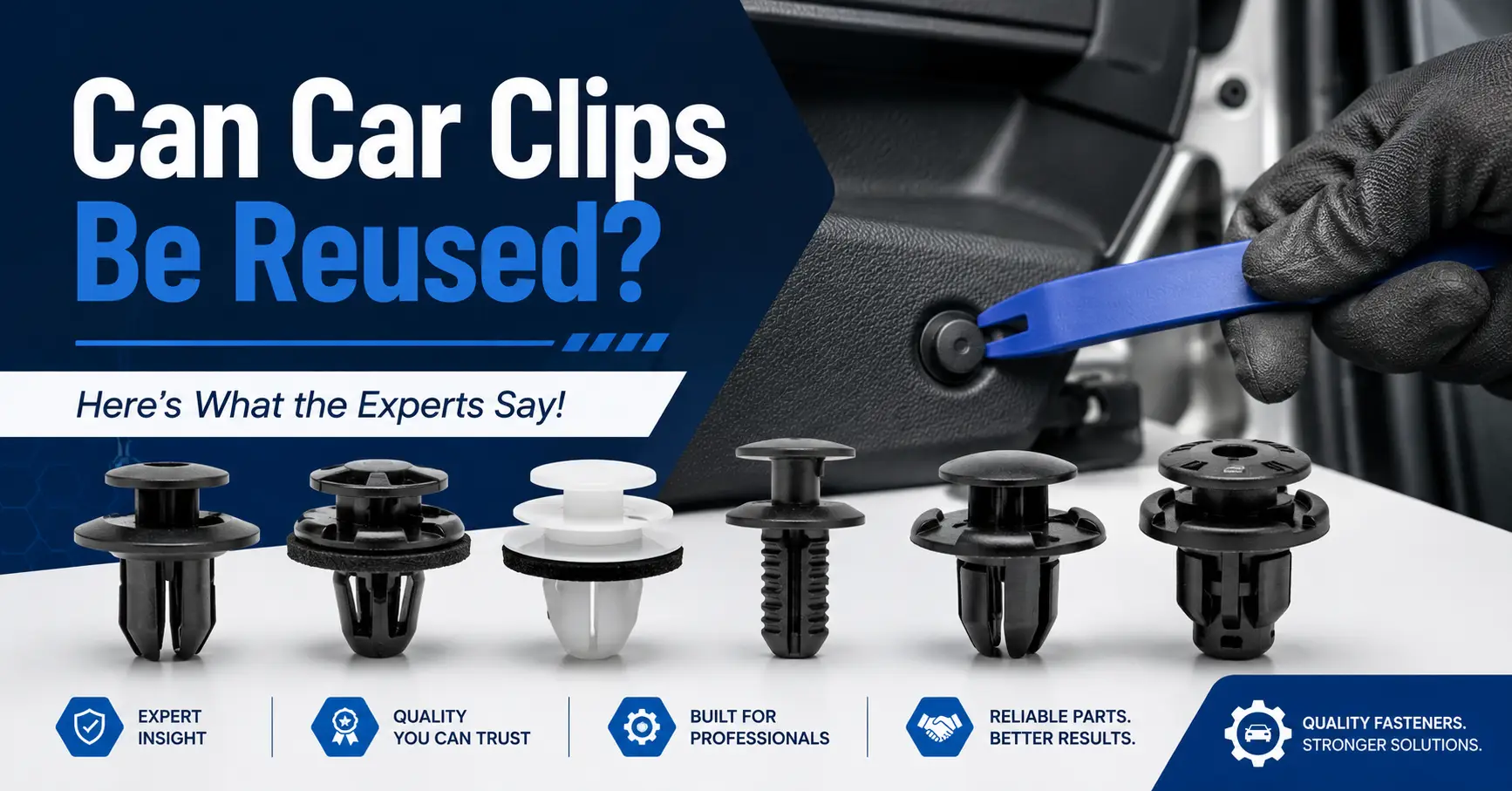
Q2: Can these clips be reused during repair work?
Some models feature re-lockable systems, allowing reuse without loss of retention strength.
Q3: How do you ensure quality for bulk export orders?
Each batch undergoes random sampling, pull-out testing, and visual inspection before packaging.
Q4: Do you provide documentation for compliance?
Yes, material certification and inspection reports are provided with each shipment.
Fastening the Future of Automotive Interiors
In the evolving automotive industry, precision fastening defines both function and perception.
QEEPEI’s automotive door panel clips combine engineered strength, acoustic stability, and export-grade consistency—helping manufacturers deliver vehicles that feel solid, silent, and sophisticated.
Explore the complete range of fastening systems on the Homepage.
For technical specifications or bulk inquiries, contact us here.